
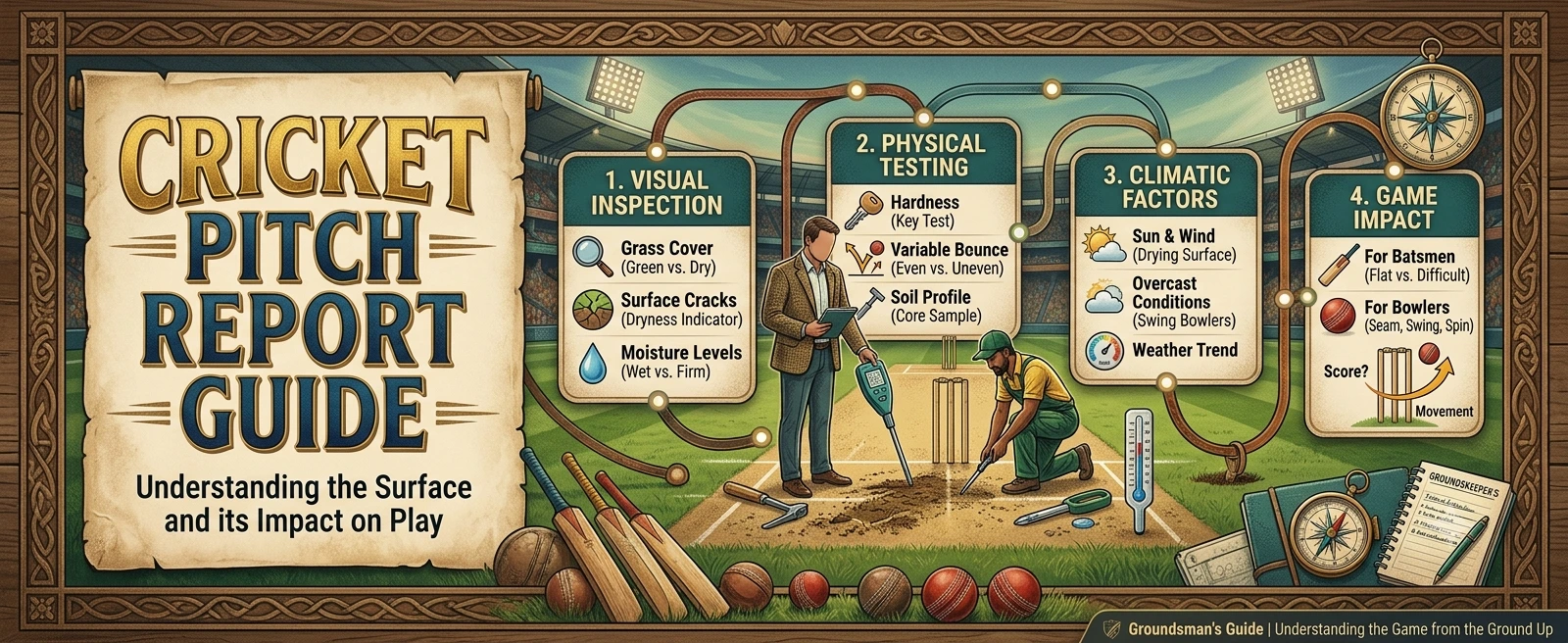
Cricket Pitch Report Guide: How Pitch Conditions Influence Every Match
Understanding a cricket match begins long before the first ball is bowled. One of the most important factors influencing the outcome of any match is the condition of the pitch. The cricket pitch affects batting, bowling, field placements, scoring patterns, and even captaincy decisions. Learning how to read a pitch report allows fans to better understand why matches unfold in different ways across formats and venues.
Whether you are following international cricket, domestic tournaments, or reading educational resources on our website, understanding pitch behaviour helps you appreciate the strategic side of the game. This guide explains how cricket pitch reports work, what different surfaces indicate, and why they play such a significant role in modern cricket.
If you are new to cricket analysis, begin with Gold 365 Cricket, where we explain the fundamentals of the sport before exploring advanced match insights.
What Is a Cricket Pitch Report?
A cricket pitch report is an analysis of the playing surface before a match begins. It explains how the pitch is expected to behave throughout the game and highlights the conditions that may favour batsmen, fast bowlers, or spin bowlers.
Pitch reports are usually prepared after carefully examining:
- the grass covering on the wicket;
- surface hardness;
- moisture levels;
- cracks or rough patches;
- weather conditions;
- previous matches played at the venue.
These observations help players, coaches, commentators, and fans understand how the pitch may influence scoring opportunities and bowling performance.
For a broader understanding of how match information is presented before play begins, readers can also explore Cricket Match Centre Guide.
Why Pitch Conditions Matter
Every cricket ground offers different playing conditions. Even two matches played at the same venue can produce different results if the pitch has changed because of weather or preparation.
Pitch conditions influence almost every aspect of a cricket match, including:
- batting confidence;
- bowling strategies;
- captaincy decisions;
- field placements;
- scoring patterns;
- match duration.
For example, a flat batting surface often leads to higher scores, while a green surface with extra moisture may assist fast bowlers during the opening overs.
Understanding these differences allows cricket fans to interpret matches more effectively instead of relying only on the final score.
Readers interested in understanding team performance alongside playing conditions should also read Cricket Team Rankings Guide.
How Pitch Reports Are Prepared
Pitch reports are based on observation rather than prediction alone. Experienced analysts examine several physical characteristics before offering their assessment.
Surface Hardness
A hard pitch generally provides consistent bounce, making stroke play easier for batsmen while allowing fast bowlers to generate additional pace.
Hard surfaces often remain stable throughout much of the match before gradually showing signs of wear.
Grass Coverage
The amount of grass present on the wicket affects seam movement.
Fresh green grass can help fast bowlers by providing additional movement after the ball pitches, especially during the early stages of play.
As the grass wears away, batting conditions often improve.
Moisture Content
Moisture inside the pitch influences how the ball behaves after bouncing.
A damp surface may initially assist seam bowlers, while a dry surface generally becomes more suitable for batting before later helping spin bowlers as cracks develop.
Surface Wear
The condition of the wicket changes as a match progresses.
Footmarks, rough areas, and surface deterioration become increasingly important during longer matches, particularly in Test cricket where bowlers can exploit changing conditions over several days.
Different Types of Cricket Pitches
No two cricket pitches behave exactly alike. However, most playing surfaces can be grouped into several common categories based on their characteristics.
Understanding these pitch types helps explain why different teams adopt different strategies in various conditions.
Batting-Friendly Pitch
A batting-friendly pitch offers even bounce, limited seam movement, and a smooth playing surface.
These conditions allow batsmen to play attacking shots with greater confidence and often result in higher team totals.
Characteristics include:
- consistent bounce;
- minimal sideways movement;
- quick outfield support;
- easier stroke play.
Many high-scoring limited-overs matches are played on surfaces designed to encourage batting.
For readers interested in understanding how batting performances influence overall team success, our Cricket Statistics Guide provides additional insights.
Bowling-Friendly Pitch
Some pitches naturally favour bowlers by providing movement, variable bounce, or slower scoring conditions.
Bowling-friendly surfaces reward accuracy, patience, and disciplined line and length rather than aggressive batting.
These conditions often produce closely contested matches where every run becomes valuable.
Successful bowling attacks adjust their pace, length, and field settings according to how the surface behaves.
Spin-Friendly Pitch
Spin-friendly wickets generally appear dry and begin assisting spin bowlers as the match progresses.
These pitches offer:
- increased turn;
- variable bounce;
- slower pace;
- greater grip for spin bowling.
Teams with experienced spin bowlers often perform particularly well on these surfaces.
Spin-friendly pitches are commonly associated with longer-format cricket and venues where dry weather contributes to surface deterioration.
Readers who want to understand how spin bowling influences overall match analysis should also read Cricket Player Insights.
Pace-Friendly Pitch
Fast bowlers benefit from surfaces that provide good pace, bounce, and seam movement.
Pace-friendly pitches usually feature:
- healthy grass coverage;
- firm surface conditions;
- consistent bounce;
- assistance for swing and seam bowling.
These wickets often produce exciting contests between aggressive opening batsmen and fast bowling attacks during the early overs.
Green Top Pitch
A green top refers to a wicket with visible grass remaining on the surface.
This type of pitch often provides:
- extra seam movement;
- early swing opportunities;
- greater assistance for fast bowlers;
- challenging batting conditions during the opening session.
Captains winning the toss on green tops frequently consider bowling first to maximise these favourable conditions.
Dry Pitch
Dry pitches contain very little moisture and gradually become slower as the match progresses.
These surfaces usually begin as balanced batting tracks before increasingly favouring spin bowlers later in the game.
Understanding dry wickets is particularly valuable when following multi-day matches because playing conditions may change significantly from the first day to the final session.
Readers following ongoing matches can combine pitch analysis with Live Cricket Updates to better understand how changing conditions influence match momentum.
How Pitch Conditions Affect Match Strategy
A cricket pitch influences much more than individual performances. Team strategy often changes according to the expected behaviour of the playing surface.
Captains adjust field placements, bowling rotations, batting approaches, and even team selection after studying the pitch report before play begins.
Coaches also use historical venue data alongside current surface conditions to prepare game plans that suit the expected pace, bounce, and movement available throughout the match.
For this reason, experienced cricket followers rarely evaluate a match without first considering the pitch report alongside team form and player availability.
Weather and Pitch Conditions
A cricket pitch never performs in isolation. Weather conditions play a significant role in determining how the surface behaves before and during a match. Temperature, humidity, rainfall, sunshine, and wind can all influence bounce, pace, spin, and ball movement.
For example, an overcast morning often assists fast bowlers because moisture in the atmosphere encourages swing bowling. On bright sunny days, pitches generally dry out more quickly, making batting easier during the early stages before gradually assisting spin bowlers later.
Rain can also affect surface conditions. Even after the covers are removed, residual moisture may help seam bowlers during the opening overs. Conversely, prolonged sunshine can produce dry, cracked wickets that become increasingly challenging for batsmen in longer matches.
Understanding both weather forecasts and pitch reports provides a more complete picture of expected playing conditions. Readers can combine this knowledge with Live Cricket Updates to better understand how changing weather influences match momentum throughout the day.
Toss Impact and Captaincy Decisions
Winning the toss is one of the first strategic moments in any cricket match. Although the toss itself does not determine the result, the decision made by the captain often depends heavily on the pitch report.
On green wickets offering early seam movement, captains frequently choose to bowl first and take advantage of favourable bowling conditions.
On flat batting surfaces with little assistance for bowlers, many teams prefer to bat first, build a competitive total, and apply scoreboard pressure later in the match.
In Test cricket, pitch deterioration is another important factor. Captains often consider how the surface is likely to change over several days before making their decision.
Successful captains combine the pitch report with weather forecasts, team strengths, and opposition analysis rather than relying on a single factor.
Readers interested in match preparation can also explore Cricket Match Centre Guide, where these elements are explained together.
Venue History and Surface Analysis
Every international cricket venue develops its own reputation based on historical playing conditions.
Some stadiums consistently produce high-scoring contests, while others are known for helping fast bowlers or spin bowlers.
Before every major match, analysts often review:
- previous average first-innings scores;
- highest successful run chases;
- bowling success by pace and spin;
- batting records at the venue;
- toss outcomes;
- historical pitch behaviour.
These statistics provide useful context when interpreting a new pitch report.
However, venue history should never be considered in isolation because weather, pitch preparation, and maintenance can produce different conditions even at the same ground.
Readers who enjoy analysing long-term performance should also read Cricket Statistics Guide, which explains how historical data supports match analysis.
How to Read a Cricket Pitch Report Like an Expert
Learning to interpret a pitch report requires understanding several key observations rather than focusing on a single characteristic.
Examine the Surface
Notice whether the pitch appears green, dry, cracked, or firm.
Each surface provides different advantages for batsmen and bowlers.
Consider the Weather
Weather conditions often determine whether early swing bowling, spin bowling, or aggressive batting becomes more effective.
Combining weather forecasts with the pitch report produces a much more accurate understanding of expected match conditions.
Review Venue Records
Historical venue statistics help identify long-term scoring trends.
Comparing previous matches with current pitch conditions often improves match analysis.
Evaluate Team Strengths
Different teams perform better under different conditions.
A strong pace attack may benefit from green pitches, while teams with experienced spin bowlers often perform better on dry turning wickets.
Readers can compare team performance trends in our Cricket Team Rankings Guide.
Follow Official Updates
Pitch conditions occasionally change shortly before play begins.
Following official match information and trusted cricket organizations provides the most accurate assessment before the first ball is bowled.
For official match information, readers can refer to the International Cricket Council (ICC).
Common Misconceptions About Cricket Pitch Reports
Many cricket fans misunderstand the purpose of a pitch report.
A Batting Pitch Does Not Guarantee High Scores
Even on excellent batting surfaces, disciplined bowling, early wickets, or changing weather conditions can significantly influence scoring.
Green Grass Does Not Always Mean Fast Bowlers Will Dominate
Although grass often assists seam bowling, weather conditions and pitch preparation also affect how much movement bowlers receive.
Pitch Reports Are Not Predictions
A pitch report provides an informed assessment based on current observations.
Unexpected weather changes, player performance, and match situations can always influence the actual outcome.
Every Match Is Different
Two matches played at the same venue may produce completely different results because of preparation methods, seasonal conditions, or surface wear.
Understanding these variables helps readers analyse cricket more objectively.
A cricket pitch report provides valuable insight into how a match may unfold by explaining the characteristics of the playing surface before the first ball is bowled. From batting-friendly wickets and green tops to dry turning tracks and pace-friendly conditions, every pitch creates different opportunities and challenges for players.
Understanding pitch reports alongside weather conditions, venue history, team strengths, and recent form allows cricket fans to develop a deeper appreciation of the game. Instead of viewing cricket as simply runs and wickets, readers can better understand the strategic decisions that shape every match.
To continue building your cricket knowledge, explore Gold 365 Cricket, Cricket Match Centre Guide, Cricket Statistics Guide, Cricket Team Rankings Guide, Cricket Player Insights, Live Cricket Updates, and IPL Cricket Guide for more educational cricket resources.

One Response